


Muscle-sparing knee replacement is recommended for patients with knee arthritis, osteonecrosis, rheumatoid arthritis, or severe knee injury when conservative treatments no longer provide relief. In short,
- Severe knee osteoarthritis that limits daily activities is the most common condition that leads surgeons to recommend muscle-sparing knee replacement.
- Factors such as your BMI, muscle strength, degree of joint damage, and overall health determine whether muscle-sparing knee replacement is the right approach for you.
- Patients who undergo muscle-sparing knee replacement often return to normal activities within 4 to 6 weeks, compared to 3 to 6 months with traditional surgery.
Knee pain that makes it hard to walk, climb stairs, or even stand up from a chair is not something anyone should have to accept as permanent. About 790,000 total knee replacements are performed every year in the United States, according to the American College of Rheumatology. For many of those patients, muscle-sparing knee replacement offers a path to faster relief with less disruption to the body.
But how do you know if this procedure is the right fit for you? The answer depends on your diagnosis, your physical condition, and the extent of your knee damage. This blog explains exactly when muscle-sparing knee replacement is recommended, who qualifies, and what you can expect from the process.
What Is Muscle-Sparing Knee Replacement?
Muscle-sparing knee replacement, also called quadriceps-sparing knee replacement, is a minimally invasive surgical procedure that replaces a damaged knee joint without cutting through the quadriceps muscle or tendon. Instead of slicing through that large muscle group at the front of the thigh, the surgeon carefully moves the muscle aside to reach the joint.
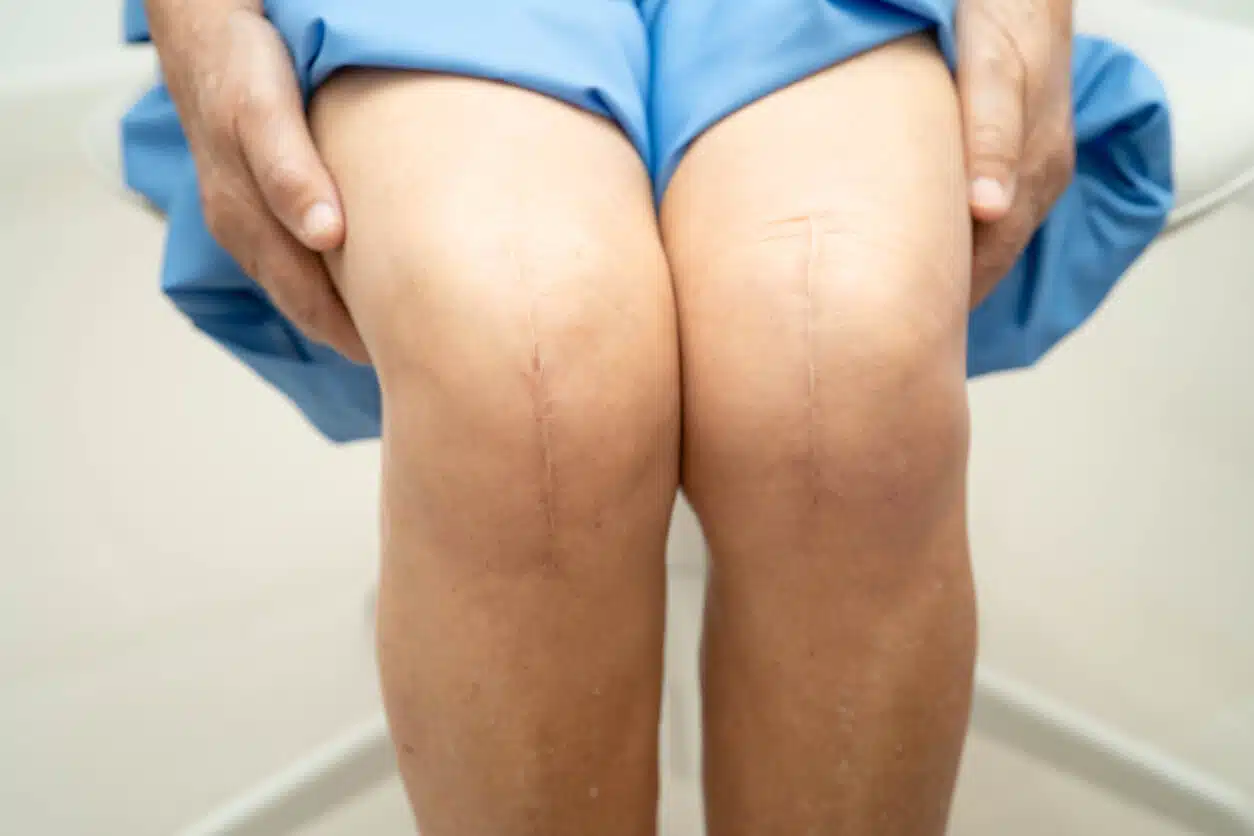
Traditional knee replacement requires an incision of 8 to 12 inches and involves cutting the quadriceps tendon to access the joint. Muscle-sparing knee replacement uses a much smaller incision, typically 3 to 5 inches, and leaves the tendon intact.
Because the muscle is preserved rather than severed, the knee’s support system remains structurally sound from the moment surgery ends. That single difference explains much of the faster recovery and lower post-surgical pain that patients experience.
What Medical Conditions Make Someone a Candidate for Muscle-Sparing Knee Replacement?
Muscle-sparing knee replacement is not a one-size-fits-all procedure. Surgeons recommend it when specific medical conditions have damaged the knee joint to the point where non-surgical treatments no longer work.
The most common conditions that may lead to a recommendation for muscle-sparing knee replacement include:
- Knee osteoarthritis — The breakdown of cartilage in the joint causing persistent pain and stiffness
- Osteonecrosis — A condition where bone tissue dies due to loss of blood supply
- Rheumatoid arthritis — An autoimmune disease that causes inflammation and joint destruction
- Inflammatory arthritis — Includes conditions such as psoriatic arthritis that damage joint surfaces
- Severe knee injury or fracture — Trauma that leaves the joint unable to function properly
- Bone tumor — In select cases involving joint-adjacent bone growths
Osteoarthritis is by far the most common reason patients need a knee replacement. According to the Osteoarthritis Action Alliance, more than 50% of people diagnosed with knee osteoarthritis will undergo a total knee replacement at some point during their lifetime.
When pain from any of these conditions begins interfering with everyday tasks, it may be time to discuss surgical options with a specialist.
Who Is the Ideal Candidate for Muscle-Sparing Knee Replacement?
A medical diagnosis alone does not make someone an automatic candidate for muscle-sparing knee replacement. Surgeons evaluate multiple physical factors to determine whether a minimally invasive approach is safe and appropriate.
Age and Activity Level
Muscle-sparing knee replacement can be appropriate across a wide range of ages. Younger, active patients often benefit significantly because preserved muscle function supports a more complete return to physical activities. Your surgeon will review your specific lifestyle goals when making the recommendation.
Body Weight and BMI
Body mass index plays a meaningful role in candidacy. Patients with a higher BMI place more mechanical stress on the knee joint, which can complicate a minimally invasive approach. Surgeons may determine that traditional surgery offers better access and visibility for patients with significant excess weight.
Degree of Joint Deformity
Patients with mild to moderate knee deformity or alignment problems are generally good candidates. Severe deformity may require the broader access that traditional surgery provides, making muscle-sparing knee replacement less suitable in those cases.
Muscle Strength and Flexibility
Strong, flexible muscles surrounding the knee support a successful outcome with the muscle-sparing approach. Patients who are willing to commit to preoperative conditioning and postoperative rehabilitation tend to have better results.
Previous Knee Surgeries
A history of prior knee procedures can affect the anatomy of the joint and surrounding tissue. Surgeons carefully review surgical history because scar tissue or altered anatomy from previous operations may rule out the minimally invasive approach.
When Is Muscle Sparing Knee Replacement Not Recommended?
Not every patient with knee pain is a candidate for this technique. Surgeons may recommend traditional total knee replacement instead when the following factors are present:
- Severe joint deformity that requires greater surgical access
- High BMI that increases complication risk with a minimally invasive approach
- Prior knee surgeries that have altered the joint’s anatomy
- Complex bone damage requiring more extensive reconstruction
- Poor overall muscle tone or flexibility that would limit recovery
The muscle-sparing technique demands a high level of surgical precision and specialized training. Choosing a surgeon experienced in minimally invasive knee procedures is essential to achieving a safe and successful outcome.
What Are the Benefits of Muscle-Sparing Knee Replacement?
For patients who qualify, muscle-sparing knee replacement offers several meaningful advantages over traditional surgery.
Faster Recovery
Because the quadriceps muscle is never cut, patients do not need to wait for tendon tissue to heal before they can engage the leg. Many patients begin walking with assistance within the first day or two after surgery.
Full recovery typically occurs within 4 to 6 weeks, compared to 3 to 6 months with traditional knee replacement.
Less Post-Surgical Pain
Soft tissue trauma is one of the primary sources of pain after any surgery. Preserving the muscle and tendon structure during muscle-sparing knee replacement significantly reduces that trauma. Patients typically report lower pain levels and rely on fewer narcotic pain medications during recovery.
Reduced Blood Loss
The minimally invasive nature of the procedure limits surgical disruption to blood vessels around the knee. Patients undergoing muscle-sparing knee replacement generally experience less blood loss during and after surgery compared to those who have traditional total knee replacement.
Shorter Hospital Stay
Many patients who undergo muscle-sparing knee replacement are discharged the same day or after an overnight stay. Traditional knee replacement typically requires a hospital stay of 1 to 3 days.
Shorter hospitalization benefits patients by reducing exposure to hospital-acquired infections and allowing earlier return to a comfortable home environment.
Better Early Range of Motion
Preserving the quadriceps muscle means the knee’s support system is immediately functional. Research shows that minimally invasive approaches can lead to improved range of motion in the early postoperative period, allowing physical therapy to progress more rapidly.
What Should You Expect During Recovery From Muscle-Sparing Knee Replacement?
Recovery from muscle-sparing knee replacement follows a structured rehabilitation process designed to restore strength, stability, and mobility.
Most patients begin walking with a walker or crutches within 24 to 48 hours of surgery. Physical therapy starts quickly and focuses on range of motion exercises, muscle strengthening, and gradual return to weight-bearing activities.
Pain management in the first days after surgery typically involves a combination of non-opioid medications and ice therapy. Because muscle trauma is minimized, the need for strong narcotic medications is usually lower than after traditional surgery. Patients are typically advised to keep the leg elevated and apply ice regularly in the first few days to manage swelling.
A personalized physical therapy plan, continued at home or in an outpatient clinic, guides recovery over the following weeks. Most patients return to routine daily activities within 4 to 6 weeks, with continued improvement in strength and endurance over the following months.
Frequently Asked Questions
Below, we’ve gathered the most frequently asked questions about muscle-sparing knee replacement and its unique approach to knee arthroplasty.
What is the difference between muscle-sparing knee replacement and traditional knee replacement?
Muscle-sparing knee replacement uses a 3- to 5-inch incision and preserves the quadriceps tendon, while traditional knee replacement requires an 8- to 12-inch incision and cuts through the tendon to access the joint.
Muscle-sparing knee replacement results in less tissue trauma, faster recovery, and lower post-surgical pain for eligible patients.
How do I know if I am a candidate for muscle-sparing knee replacement?
Good candidates are generally patients with knee osteoarthritis, rheumatoid arthritis, osteonecrosis, or severe knee injury who have not found adequate relief from non-surgical treatments.
Ideal candidates are at a healthy weight, have adequate muscle strength, and do not have severe joint deformity or a history of complex prior knee surgeries.
How long does muscle-sparing knee replacement surgery take?
The procedure typically takes 1 to 2 hours, depending on individual factors and the complexity of the joint damage being addressed.
How long do knee implants last after a muscle-sparing knee replacement?
Modern knee implants are designed for long-term durability. With proper care and avoidance of high-impact activities, knee replacements can last 15 to 20 years or more. The surgical approach does not typically affect implant longevity, but precise implant placement, which muscle-sparing techniques support, is critical to long-term success.
Will I need physical therapy after a muscle-sparing knee replacement?
Yes. Physical therapy is an essential part of recovery. A physical therapist will guide you through exercises that restore range of motion, rebuild muscle strength, and improve joint stability.
Committing to your rehabilitation plan is one of the most important factors in achieving a full and lasting recovery.
What happens if I do not have knee replacement surgery?
Without surgical intervention, conditions such as knee osteoarthritis typically worsen over time. Progressive joint damage can lead to increased pain, greater loss of mobility, and a significantly reduced quality of life. A consultation with an orthopedic specialist can help you weigh the risks of delaying treatment against the benefits of surgical correction.
Muscle Sparing Knee Replacement in Bismarck, ND
If knee pain is limiting your quality of life and conservative treatments are no longer providing relief, it may be time to explore surgical options with an experienced orthopedic specialist. The Bone & Joint Center is North Dakota’s premier private orthopedic practice, offering advanced knee replacement procedures tailored to each patient’s specific needs and goals.
The team at The Bone & Joint Center will evaluate your diagnosis, physical condition, and lifestyle to determine whether muscle-sparing knee replacement is the right path forward.
