



Custom orthotics are highly effective at relieving pain caused by Morton’s neuroma. They work by separating the foot bones and reducing pressure on the affected nerve. Customized insoles significantly reduce pain scores and improve foot function when combined with proper footwear.
In short,
- Custom orthotics separate foot bones to decrease nerve compression.
- Supportive devices help patients walk with significantly less pain.
- Conservative care often prevents the need for invasive medical treatments.
When you are searching for effective Morton’s neuroma treatment, you may wonder if custom orthotics can provide the relief you need. A sharp, burning pain in the ball of your foot can make every step feel miserable. Many patients describe the sensation as feeling like they are standing on a pebble or a fold in their sock. Finding the right Morton’s neuroma treatment is critical for getting you back on your feet.
You do not have to live with foot pain forever. Medical specialists understand how this condition develops and how to treat it properly. By utilizing targeted support devices, many patients find profound relief without ever needing surgery.
What Is Morton’s Neuroma?
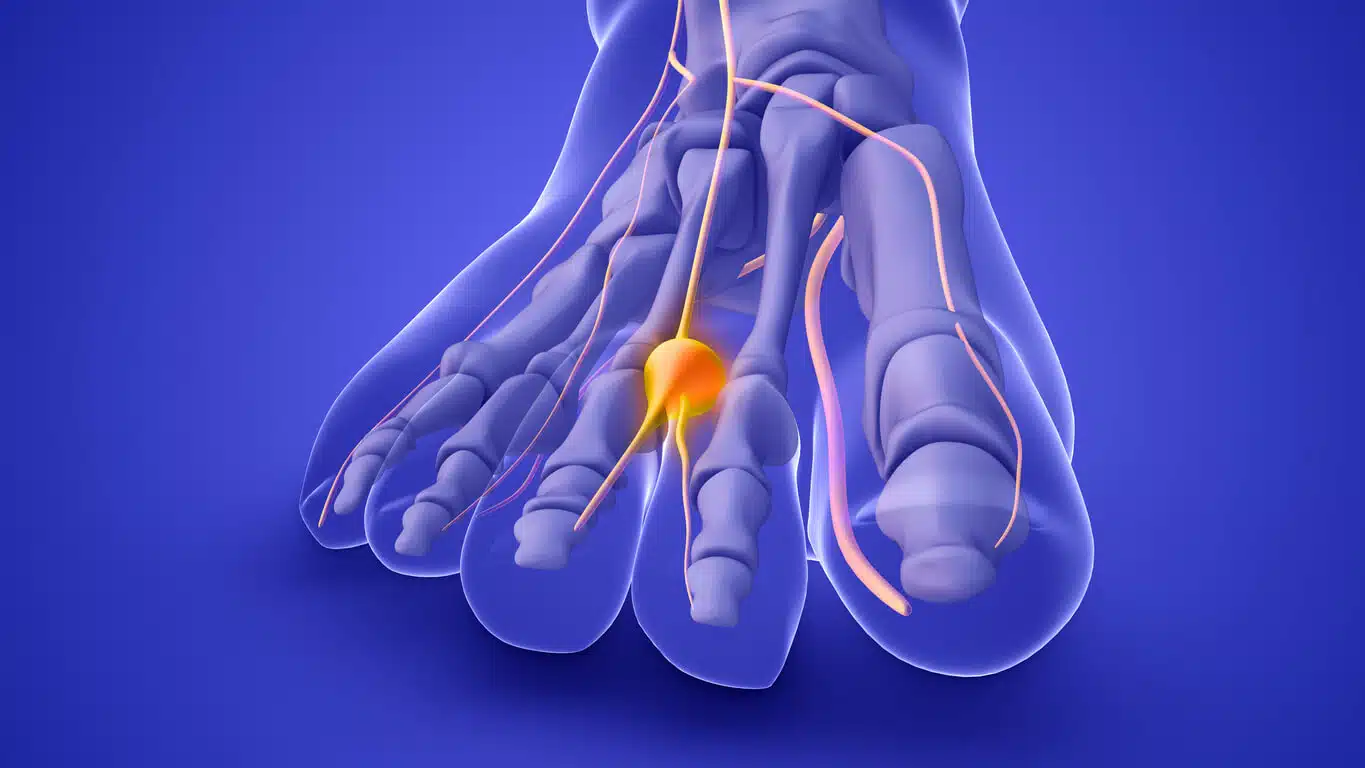
Before exploring your options for Morton’s neuroma treatment, you must understand exactly what the condition entails. Morton’s neuroma involves a thickening of the tissue around one of the nerves leading to your toes. This typically occurs between the third and fourth toes. As the tissue thickens, it compresses the nerve and generates significant pain.
It’s important to note that there is no outward sign of this condition, such as a lump. Instead, patients experience burning pain in the ball of the foot. Your toes might also sting, burn, or feel completely numb.
If you ignore these symptoms, the nerve irritation will likely worsen over time. This makes early intervention and conservative Morton’s neuroma treatment incredibly important. Proper footwear and medical support can stop the nerve damage from progressing.
What Causes This Foot Condition?
The exact cause of Morton’s neuroma often traces back to excessive pressure or irritation applied to the nerve. High-heeled shoes are notorious for forcing the toes into a cramped box and placing extra weight on the ball of the foot. Shoes that are tight or ill-fitting also contribute heavily to nerve compression.
Certain athletic activities can also trigger this painful condition. High-impact sports such as jogging or running subject your feet to repetitive trauma. Sports that require tight shoes, such as rock climbing or skiing, place direct pressure on your toe nerves.
Foot deformities play a significant role in developing this nerve issue. People with bunions, hammertoes, flat feet, or high arches have a higher risk of developing Morton’s neuroma. Understanding these causes helps your orthopedic specialist design a highly effective Morton’s neuroma treatment plan.
How Do Custom Orthotics Help Morton’s Neuroma Treatment?
Custom orthotics are specialized shoe inserts crafted to fit the exact contours of your unique feet. Unlike over-the-counter insoles, medical professionals design these devices to address your specific biomechanical issues. They are a cornerstone of conservative Morton’s neuroma treatment.
Orthotics feature a specialized pad that sits just behind the ball of the foot. This metatarsal pad lifts and separates the bones in your foot, which immediately relieves pressure on the inflamed nerve. By correcting abnormal foot mechanics, orthotics reduce the friction that causes the tissue to thicken.
Clinical research heavily supports this approach to healing. A study published in Clinical Rehabilitation examined the effectiveness of customized insoles in patients with Morton’s neuroma through a randomized, double-blind trial.
Researchers found that patients using customized foot orthoses experienced a statistically significant reduction in pain compared to the placebo group. The study demonstrates that custom orthotics provide a reliable, evidence-based Morton’s neuroma treatment.
What Other Conservative Treatments Exist?
If custom orthotics do not resolve your symptoms completely, your physician might recommend other conservative therapies. Changing your footwear is always the mandatory first step in any treatment plan. You must wear shoes with a wide toe box and plenty of room to allow your foot bones to spread naturally.
Corticosteroid injections are another common Morton’s neuroma treatment. Your physician may inject a steroid medication directly into the painful area to reduce inflammation.
Some patients also find relief by taking oral nonsteroidal anti-inflammatory drugs (Advil, Motrin) to manage the swelling and discomfort.
Physical therapy can also provide significant benefits for foot pain. A study published in the National Institutes of Health analyzed the conservative treatment of this condition and found that shoe modifications combined with targeted orthotics yielded high success rates. The research indicates that conservative measures should always precede surgical intervention for optimal patient outcomes.
How Does This Compare To Custom Orthotics For Plantar Fasciitis?
Many patients confuse Morton’s neuroma with plantar fasciitis because both cause severe foot pain. However, plantar fasciitis involves inflammation of the thick band of tissue running across the bottom of your foot. The pain usually concentrates at the heel rather than the ball of the foot.
The medical devices used for these conditions share similarities but serve different mechanical purposes. When doctors prescribe custom orthotics for plantar fasciitis, the goal is to support the arch and cushion the heel. The inserts stabilize the heel to prevent the fascia from stretching excessively during walking.
For Morton’s neuroma, the orthotic design shifts the focus to the front of the foot. The device must offload weight from the exact nerve branch that is inflamed. While the goals differ, custom orthotics provide excellent non-surgical solutions for both distinct conditions.
Frequently Asked Questions (FAQ)
Navigating foot pain can be overwhelming for many patients. We have compiled answers to some of the most common questions regarding foot health and nerve pain.
Can Morton’s neuroma heal without surgery?
Yes, most patients achieve complete relief through conservative measures. Proper shoes, custom orthotics, and rest allow the inflamed nerve to heal over time.
How long does it take for orthotics to work?
You may notice a slight reduction in pressure immediately upon wearing your custom inserts. However, it typically takes several weeks for the nerve inflammation to subside completely.
Can I wear high heels with custom orthotics?
Physicians strongly advise against wearing high heels when recovering from this nerve condition. High heels counteract the purpose of your orthotics by forcing excess weight back onto the ball of your foot.
Are over-the-counter insoles just as good?
Over-the-counter insoles provide basic cushioning, but they do not correct your specific foot mechanics. Custom orthotics are precisely molded to separate your specific foot bones and remove pressure from the exact irritated nerve.
Find Morton’s Neuroma Treatment in Bismarck, ND
Living with constant foot pain drastically reduces your quality of life. You deserve to walk, run, and enjoy your daily activities without suffering from sharp, burning nerve pain. Finding the right medical support is the first step toward reclaiming your active lifestyle.
If you are struggling with foot pain, our team is here to help. The experts at The Bone & Joint Center utilize advanced diagnostic tools, including an X-ray or an MRI, to pinpoint the exact cause of your discomfort. We are highly dedicated to providing exceptional orthopedic care and personalized solutions for every patient.
Do not let foot pain keep you sidelined any longer. Contact The Bone & Joint Center today at (701) 946-7400 to schedule your comprehensive evaluation. We will help you find the most effective Morton’s neuroma treatment in Bismarck, ND, so you can walk comfortably again.
